Pillar guide · 10 min · Updated 30 Aug 2026 · Editorial team
Targeting chord tones
Quick answer
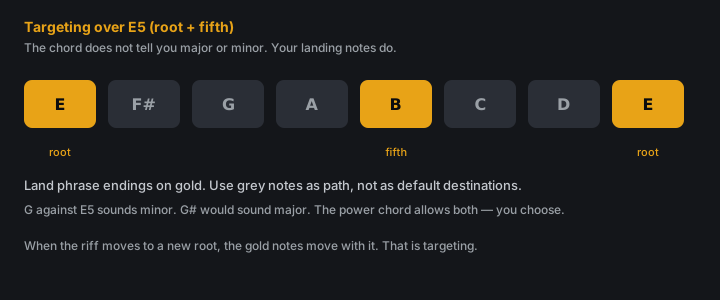
Over a power-chord riff, the notes that sound “finished” are the root and the fifth of whatever chord is sounding. Aim phrase endings there. Scale tones in between are paths. If every bar ends on a random scale degree, it reads as practice, not a solo.
Key takeaways
- Power chords are root + fifth. They do not pick major or minor for you.
- Landing on the root or fifth at the end of a phrase is the first targeting skill.
- When the riff changes root, the target moves. The shape can stay; the destination cannot.
Problem statement
Knowing the scales metal uses does not produce a solo. Running the box in time still sounds like the box if downbeats and phrase endings ignore the riff underneath.
Main sections
1. Name the chord under you
If the rhythm is E5 for two bars then G5 for two bars, your targets are E/B, then G/D. You do not need a full triad spelling to start. See power chord.
2. One phrase, one landing
Play any three to five notes from the scale you already use. The last note must be a target of the chord that is sounding on that beat. If you miss, the phrase is homework, not a line.
3. Move when the riff moves
Loop a two-chord vamp. Same fingering is allowed. The ending note must change with the chord. That single constraint produces more “musical” playing than a new mode name.
4. Color on purpose
End on G over E5 if you want minor. End on the flat 2 if you want the phrygian sting. Those are choices after root/fifth landings are reliable—not decorations to hide aimless runs.
Practical advice
Record a mute-tight riff. Solo with one constraint: every bar’s last 8th is a target. Technique (taps, sweeps, legato) is allowed only if the landing still hits.
Common mistakes
- Finishing every run on the highest note in the box.
- Changing scales when the real problem is the destination.
- Adding speed so targeting errors go by faster.
Related reading
Scales metal actually uses · Lead hub · Scales hub · Tapping · Do I need theory?
Sources: basic tonal targeting over fifth-based harmony. Stylistic, not a corpus study of metal solos. Updated 30 Aug 2026 · 10 min